
Fuel Pilferage in Fleet Trucks: Where Diesel Goes Missing and How GPS Data Exposes It
Diesel is one of the largest running costs for any truck fleet, whether the trucks belong to the company or to a hired transporter. Some of that diesel never reaches the engine. It is drained at a roadside stop, billed but never filled, or burned on trips nobody approved. Most fleets know this happens. Few can say which trucks, which routes, or how much.
Why diesel loss is hard to see
Fuel records and trip records usually live in different places. Diesel issued sits in fuel slips, pump statements, or driver advance registers. Trip details sit in dispatch sheets or driver logs. When nobody compares the two for each trip, a few extra liters per trip disappear into monthly averages, and pilferage looks like normal consumption.
You do not need a fuel sensor on every truck to start finding the gap. GPS tracking already records how far each truck traveled, where it stopped, and for how long. Put that next to the diesel you issued, and the trips that do not add up start to stand out.
Where diesel goes missing
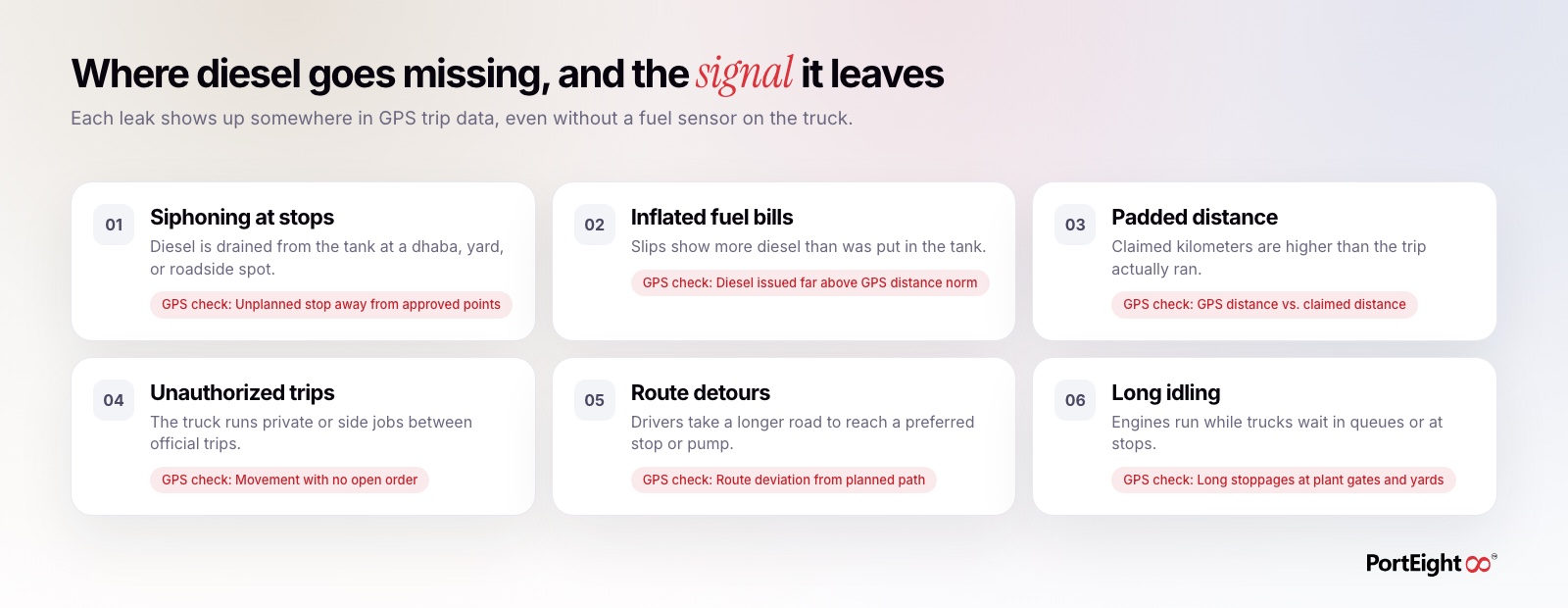
Pilferage rarely happens in one dramatic event. It is usually small amounts, repeated across many trips. These are the most common leak points, and each one leaves a trace in GPS trip data.
- Siphoning at stops: Diesel is drained from the tank at a dhaba, a parking yard, or a quiet roadside spot, often to be sold locally.
- Inflated fuel bills: The fuel slip or pump bill shows more liters than were actually put in the tank, sometimes with the pump attendant involved.
- Padded distance: The driver or transporter claims more kilometers than the truck actually ran, which justifies a larger diesel allowance.
- Unauthorized trips: The truck runs private jobs or side loads between official trips, using diesel the company paid for.
- Route detours: Drivers take a longer road to reach a preferred pump, dhaba, or buyer for drained fuel.
- Long idling: Engines run for hours while trucks wait at plant gates or in yards. This is waste rather than theft, but it still shows up as missing diesel.
Hired fleets and owned fleets leak differently
Who bears the loss depends on how diesel is paid for, and that changes what you should watch.
- Owned fleets: The company buys all the diesel, so every lost liter is a direct cost. The usual risks are siphoning, fake or inflated bills, and unauthorized trips by drivers.
- Hired fleets with company-supplied diesel: When you issue fuel slips, run a tie-up pump, or give diesel advances to transporters, you carry the fuel risk. Padded distance and inflated slips are the main concerns.
- Hired fleets on all-in freight: When the transporter buys its own diesel, the fuel loss is theirs. But the same stops and detours can signal material pilferage or delays, which are your problem.
Many companies run a mix of all three. It is worth listing which trucks and contracts fall into each group, so the checks below are applied where the fuel risk actually sits.
Start with distance: the expected diesel for each trip
The simplest check is to compare diesel issued with the diesel a trip should have needed. GPS gives you the actual distance traveled. Your fleet history gives you a fair consumption norm in kilometers per liter for each vehicle type, loaded and empty.
- Set norms by vehicle type and load: A loaded tipper on a hilly mine road uses far more diesel per kilometer than an empty truck on a highway. Use separate norms for loaded and empty legs.
- Use GPS distance, not claimed distance: Calculate expected diesel from the distance the truck actually traveled, not from the driver log or the standard route chart.
- Compare per trip, not per month: Monthly totals hide individual bad trips. Compare expected and issued diesel for every trip or every fill.
- Allow a tolerance band: Traffic, loading delays, and weather all affect consumption. Only flag trips where the gap is larger than the band you agree on.
For example, take a 380 km round trip, 190 km loaded at a norm of 3.0 km per liter and 190 km empty at 4.0 km per liter. Expected diesel is about 111 liters. If 135 liters were issued, 24 liters need an explanation. These are example values only; set your own norms from your fleet records.
Read the stoppage data and mark approved points with geofences
Distance tells you that diesel is missing. Stoppages often tell you where it went. Siphoning needs the truck to stand still, usually somewhere away from the route plan. GPS records every stop with its location, start time, and duration.
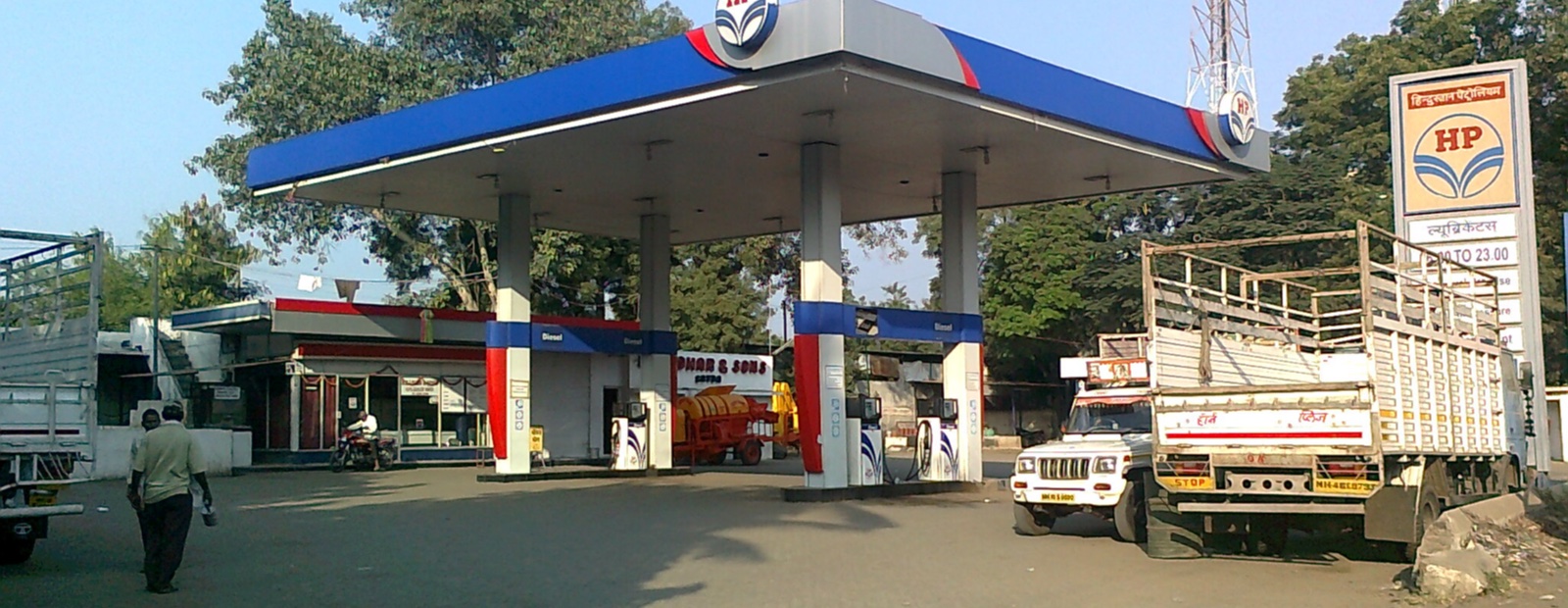
- Geofence approved locations: Draw geofences around loading points, unloading points, approved fuel pumps, and approved rest stops.
- Flag stops outside geofences: A long stop that falls outside every approved geofence deserves a question, especially at night.
- Look for repeat locations: When several trucks keep stopping at the same dhaba or yard and those trips also show a diesel gap, you have likely found a pilferage point.
- Match fills to pump geofences: A fuel slip from a pump the truck never entered, according to GPS, is a strong sign of a fake bill.
- Watch movement between trips: Distance traveled when the truck had no assigned trip points to unauthorized use.
A single unplanned stop is not proof of theft. Drivers stop for food, rest, repairs, and police checks. The signal is a pattern: the same driver, transporter, or location linked to stops and diesel gaps again and again.
Build a weekly review routine
Data only helps if someone acts on it. A short weekly review keeps the checks consistent and shows drivers and transporters that the numbers are being watched.
- List the trips with the largest gap between issued and expected diesel.
- For each one, open the GPS route and check for unplanned stops, detours, and extra distance.
- Ask the driver or transporter to explain specific stops with dates, times, and locations.
- Record the outcome against the trip: explained, recovered, or escalated.
- Review the norms each quarter so they stay fair as roads, loads, and vehicles change.
For hired fleets, agree on these rules in the contract: approved pumps, the consumption norms used, and how unexplained diesel will be recovered. Clear rules settled in advance cause far fewer disputes than deductions made after the fact.
How PortEight helps
PortEight gives fleet and logistics teams the trip data that fuel checks depend on. GPS fleet tracking records the actual distance, route, and every stoppage for each truck. Geofencing marks loading points, unloading points, approved pumps, and rest stops, so stops outside them are easy to spot. Digital freight orders give each planned trip a record to check against, which makes trips with no matching order easier to question. The central dashboard brings routes, stoppages, and trip distance into one place, so your team can compare them with the diesel you issued and focus on the trips that need a closer look. PortEight does not measure fuel levels in the tank; it gives you the trip evidence to check your fuel records against.
Take control of your logistics
operations in real time
Automate tracking, optimize movement, and eliminate delays across your entire supply chain.
Contact Us