
12 Logistics KPIs Every Plant Operations Head Should Track
Plant logistics generates a lot of data: gate logs, weighbridge slips, GPS trips, freight bills. Very little of it reaches the plant head in a form that supports decisions. The answer is not more reports. It is a short set of KPIs that cover the whole flow, from a truck arriving at the gate to its freight bill being paid.
Why a short list works better
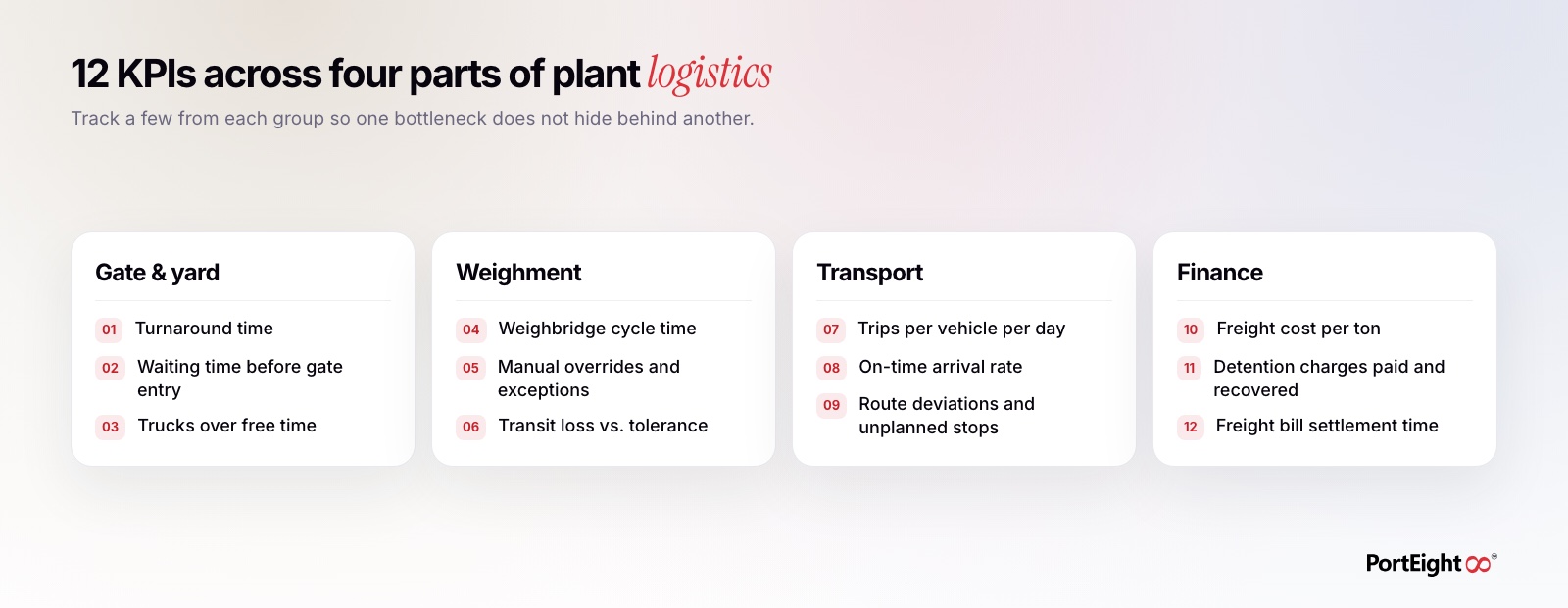
Tracking one or two numbers hides problems. A plant can improve turnaround time while transit loss quietly rises. Tracking fifty numbers hides them in a different way. The 12 KPIs below cover four areas: gate and yard, weighment, transport, and finance. Together they show where delays and costs start.
Gate and yard
- 1. Turnaround time: Average time from gate entry to gate exit. The single best summary of how smoothly the plant handles trucks.
- 2. Waiting time before gate entry: Time between a truck reaching the plant boundary and entering the gate. Often uncounted, but transporters count it.
- 3. Trucks over free time: The number of trucks currently on site beyond their contracted free time. This is where detention charges start.
Weighment
- 4. Weighbridge cycle time: Average time a truck spends at the weighbridge, including the queue. A common hidden bottleneck.
- 5. Manual overrides and exceptions: How often weights are entered or edited by hand. A rising count is an early warning for data quality and fraud risk.
- 6. Transit loss vs. tolerance: The share of trips where the unloading weight falls outside the agreed tolerance compared with the loading weight.
Transport
- 7. Trips per vehicle per day: How hard the fleet is actually working. Falling numbers usually point back to delays at the plant.
- 8. On-time arrival rate: The share of trucks arriving within their planned window. Poor arrival discipline makes yard planning impossible.
- 9. Route deviations and unplanned stops: Trips that leave the approved route or stop in unapproved locations, tracked through GPS and geofencing.
Finance
- 10. Freight cost per ton: Total freight spend divided by tons moved. Track it by route and transporter to find outliers.
- 11. Detention charges paid and recovered: What the plant paid in detention, and what it recovered from others. Both should be backed by timestamps.
- 12. Freight bill settlement time: Days from delivery to payment. Slow settlement strains transporter relationships and pushes up rates.
Review each KPI at the right rhythm
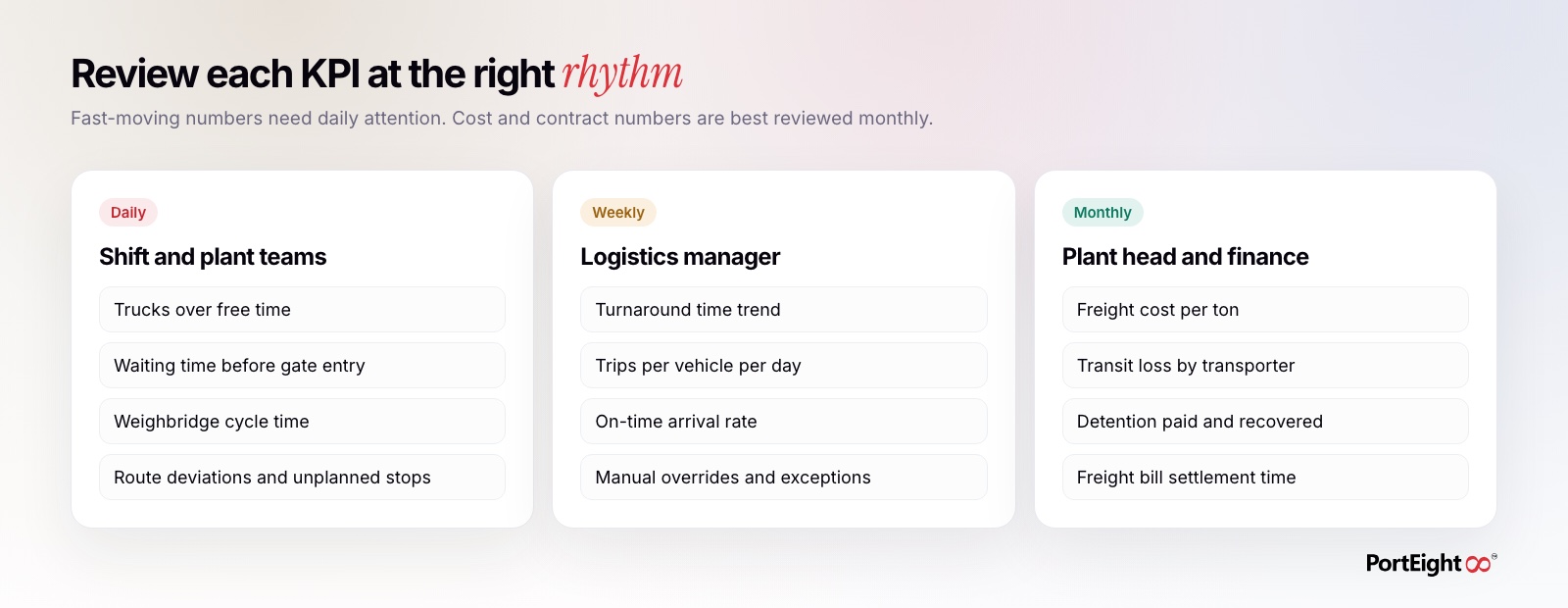
Not every number needs the same attention. Fast-moving operational KPIs should be visible to shift teams in real time and reviewed daily. Trend KPIs suit a weekly review by the logistics manager. Cost and contract KPIs are best reviewed monthly with finance, when there is enough data to compare transporters and routes fairly.
Getting reliable data for these KPIs
Each KPI is only as good as the timestamps and weights behind it. When gate entries, weighments, and trip events are recorded manually, the numbers arrive late and are open to dispute. The most reliable approach is to capture each event automatically at the source: GPS for arrival and route, RFID or number plate recognition at the gate, and manless weighment at the weighbridge, all linked to the same trip and order.
How PortEight helps
PortEight brings GPS tracking, geofencing, manless weighbridge automation, and orders and payments onto one platform, so all 12 KPIs come from the same trip records. The central dashboard shows the daily operational numbers live for shift teams, while trend and cost views give logistics managers and plant heads the weekly and monthly picture without building spreadsheets by hand.
Take control of your logistics
operations in real time
Automate tracking, optimize movement, and eliminate delays across your entire supply chain.
Contact Us