
Inbound Raw Material Logistics for Steel Plants: Scheduling, Weighment, and Quality Holds
Photo: Pratheep.mn, CC BY-SA 4.0, via Wikimedia Commons
A steel plant runs on a steady flow of iron ore, coal, and limestone. When that flow is uneven, the effects show up everywhere: trucks queue at the gate, stockyards run short of one material while overflowing with another, and payments stall because no one can agree on what was actually received. Most of these problems start with how inbound trips are scheduled, weighed, and recorded, not with the materials themselves.
Three materials, three different problems
Each raw material behaves differently in transport and at the receiving end. Treating them as one stream of "inbound trucks" hides the issues that matter for each.
- Iron ore: Usually moves as lump or fines, often over long distances from mines or sidings. Moisture and fines content can change weight between dispatch and receipt, and grade affects the price the plant pays.
- Coal: Coking and non-coking coal may come from different sources and go to different stockpiles. Moisture is a common reason for weight differences, and coal quality is often checked before the plant accepts the full invoice value.
- Limestone and other fluxes: Typically short-haul, high-volume trips. The challenge is less about distance and more about the number of trucks arriving at once and keeping weighments accurate at that pace.
This post focuses on road trips. Many plants also receive material by rail, but the truck flow is where most gate congestion, weighment errors, and disputes start.
The inbound trip, step by step
An inbound trip has more handoffs than it first appears. The mine or supplier loads and weighs the truck. The transporter drives it to the plant. Security checks it at the gate. The weighbridge records gross weight. The stockyard team directs unloading. The weighbridge records tare weight. Quality may draw a sample. Stores records the receipt, and finance pays the supplier and transporter. Each team usually keeps its own record, and those records rarely line up without manual work.
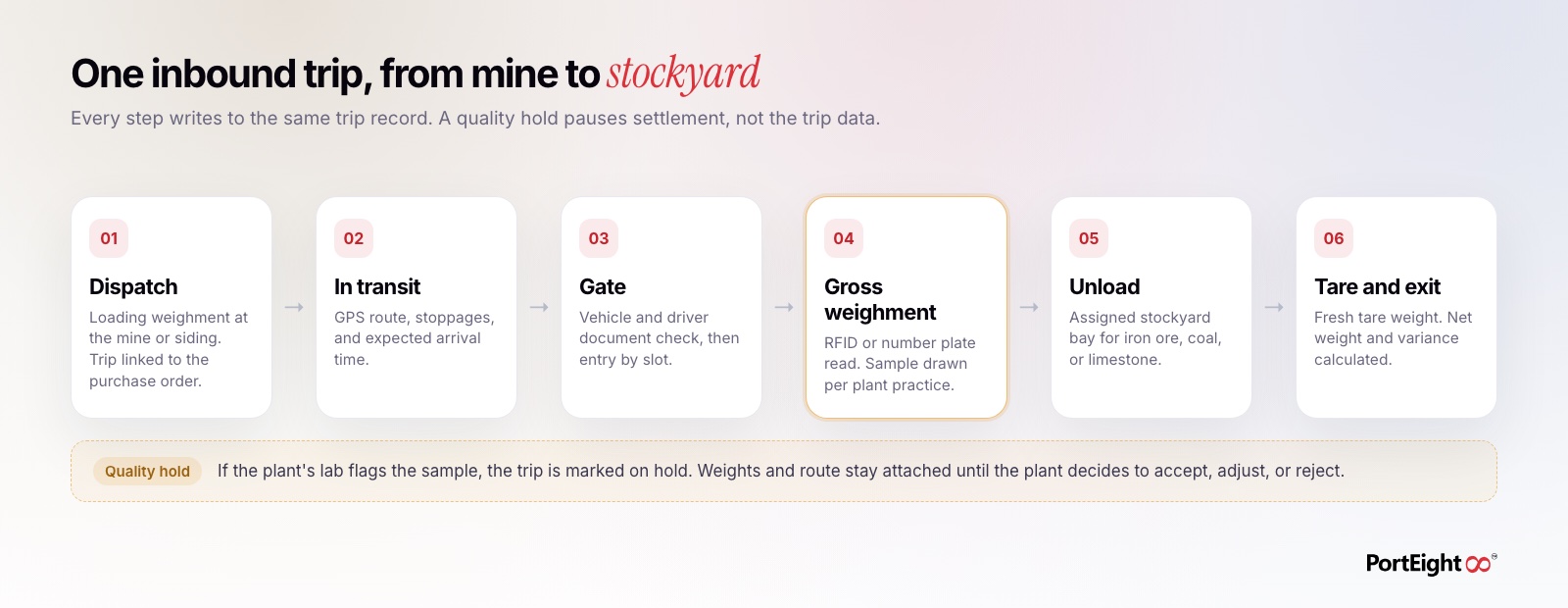
The fix is a single trip ID that every step writes to. If the loading weighment, GPS route, gate entry, plant weighments, and unloading bay all sit on the same record, the plant can answer most questions about a trip without calling three departments.
Weighment: get both weights on the same trip
Weighment is where most inbound disputes begin. The supplier invoices on the loading weight. The plant receives on its own weight. If the two do not match, someone has to decide which number to pay on.
- Weigh every truck twice at the plant: Record gross weight on entry and a fresh tare weight on exit. Stored tare values drift as trucks are modified, refueled, or carry leftover material.
- Identify the vehicle automatically: RFID tags or camera-based number plate recognition remove the risk of a clerk entering the wrong vehicle number.
- Capture weights directly from the indicator: Manual entry invites typing errors and, occasionally, deliberate changes.
- Link the plant weighment to the loading weighment: The variance between dispatch and receipt should be calculated as soon as the tare is recorded, not at month-end.
- Keep camera images with each weighment: Photos of the truck and load on the platform help settle disputes later.
Quality holds: keep the hold and the trip connected
Many steel plants sample incoming iron ore and coal and test it in their own lab before accepting the full value of a consignment. The sampling method, test parameters, and acceptance rules are set by the plant and its supply contracts. That process belongs to the quality team. What logistics data can do is make sure the result lands on the right trip.
Problems arise when the lab result and the trip record live in different places. A sample is drawn from a truck, the result comes back a day later, and by then nobody is sure which trips it applies to. The truck has been paid for, or the payment is held for every trip from that supplier because no one can isolate the affected ones.
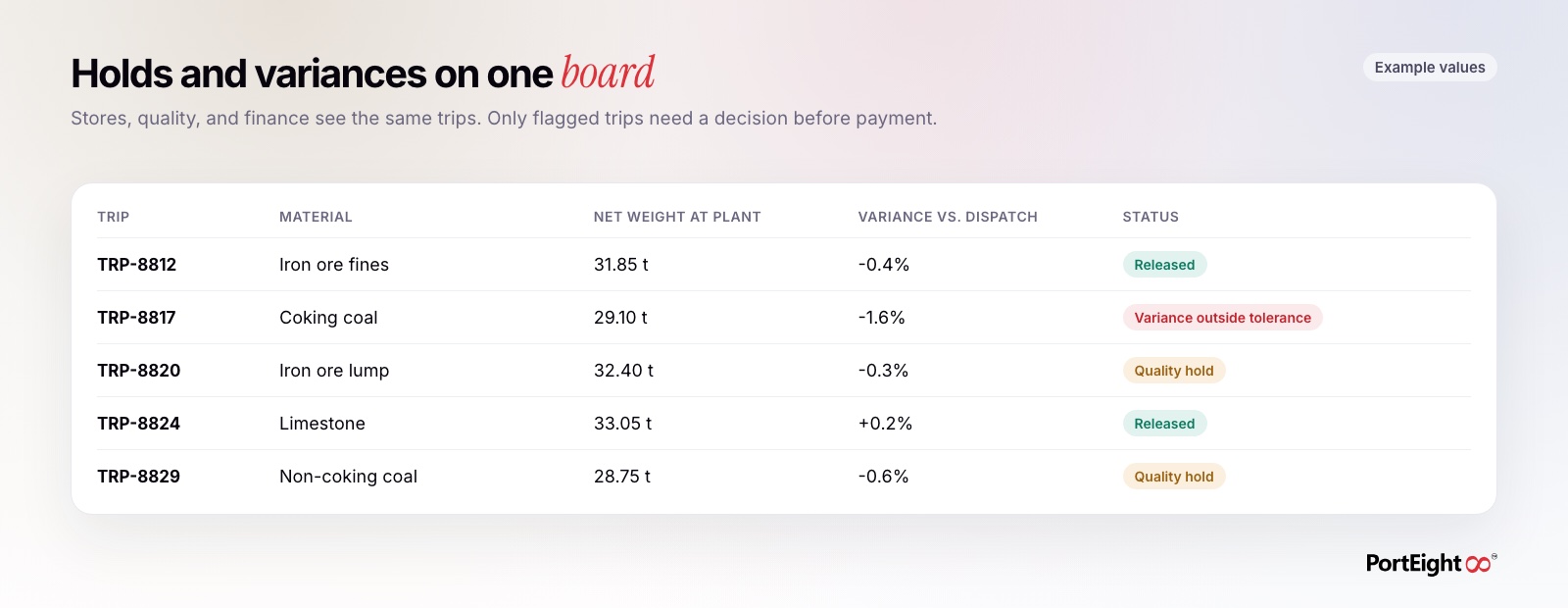
- Mark the trip, not the supplier: When quality raises a hold, flag the specific trip or batch of trips so other deliveries can be settled normally.
- Record who placed the hold and why: A short reason and a name save time when the supplier asks.
- Keep weights and route attached: The hold should not separate the trip from its weighment and GPS data. If the plant later adjusts the price, it needs both.
- Close holds on a schedule: A hold with no follow-up date becomes a payment delay. Review open holds daily.
Scheduling arrivals so the yard does not choke
Inbound trucks tend to bunch. Transporters dispatch in the morning, mines release trucks in batches, and a whole convoy can arrive within the same hour. The weighbridge and unloading bays cannot absorb that peak, so trucks wait and detention builds.
- Plan against stock, not just orders: Schedule more trips for the material that is running low in the stockyard, and fewer for the one that is already full.
- Use expected arrival times: GPS tracking shows when each truck will reach the plant, so the yard team can plan unloading bays before the truck arrives.
- Set arrival slots by material: Separate peaks for iron ore, coal, and limestone if they share a weighbridge or approach road.
- Check documents before the gate: Verifying vehicle and driver documents in advance avoids sending a truck back after it has already joined the queue.
- Watch the boundary, not just the gate: A geofence around the plant shows how many trucks are waiting outside, which is often the first sign of a bottleneck.
What finance needs at month-end
Finance teams pay suppliers for material and transporters for freight, often on different terms. Both payments depend on the same facts: how much arrived, when, and whether any of it is on hold. When those facts are in one record, settlement becomes a review of exceptions instead of a reconstruction of the month.
- Net received weight per trip, with the variance against dispatch weight.
- Status of each trip: released, on quality hold, or outside the agreed weight tolerance.
- Arrival and exit times, for detention claims from transporters.
- A clear link from each freight bill line to the trip it covers.
How PortEight helps
PortEight gives steel plants one trip record for every inbound truck. GPS fleet tracking and geofencing show where each truck is, when it will arrive, and how many are waiting at the boundary. Vehicle and driver documents can be checked through Parivahan and Sarathi before the truck reaches the gate. Manless weighbridge automation identifies vehicles by RFID or camera-based number plate recognition and records gross and tare weights directly, then links them to the loading weighment on the same trip.
PortEight does not test material quality. When the plant's quality team places a hold, the trip's weighbridge records and GPS route are already in the central dashboard, so stores, quality, and finance review the same facts. Digital freight orders, invoicing, and payments use that same trip data, so released trips can be settled while trips on hold wait for a decision.
Take control of your logistics
operations in real time
Automate tracking, optimize movement, and eliminate delays across your entire supply chain.
Contact Us