
Transit Loss in Bulk Material Transport: How to Reconcile Loading and Unloading Weights
Bulk materials such as coal, limestone, iron ore, clinker, and fly ash almost never arrive weighing exactly what was dispatched. Some difference is normal. Material dries out or picks up moisture, and two weighbridges never agree perfectly. The problem is that many plants cannot tell normal variation from real loss, so they either accept every shortage or argue over every trip.
What transit loss is
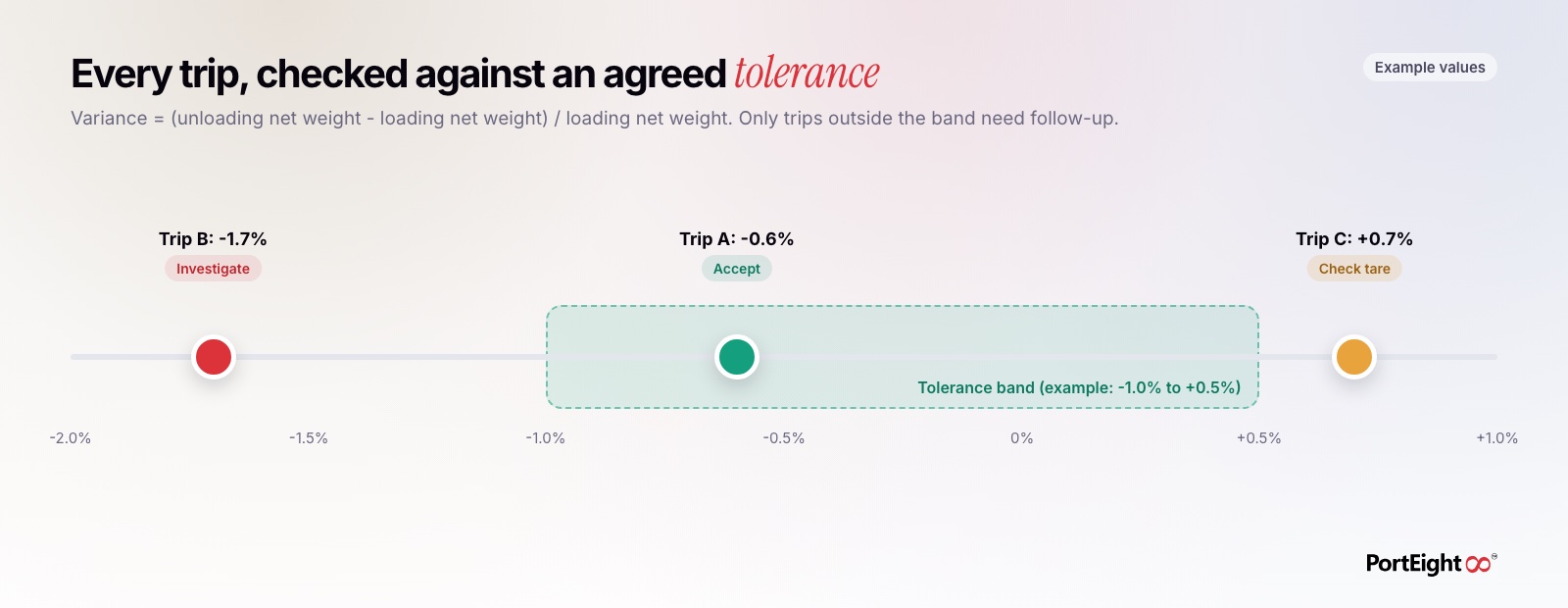
Transit loss is the difference between the net weight recorded at the loading point and the net weight recorded at the destination. It is usually expressed as a percentage of the loading net weight. A negative value is a shortage. A positive value means the truck arrived heavier than it left, which usually points to moisture or a tare weight error.
Why every trip needs a tolerance band
Most supply contracts define an allowed shortage for each material. Trips inside that band are accepted. Trips outside it need investigation and, if the loss is confirmed, a deduction from the freight or material payment. The tolerance band turns a pile of weight records into a short list of trips that actually need attention.
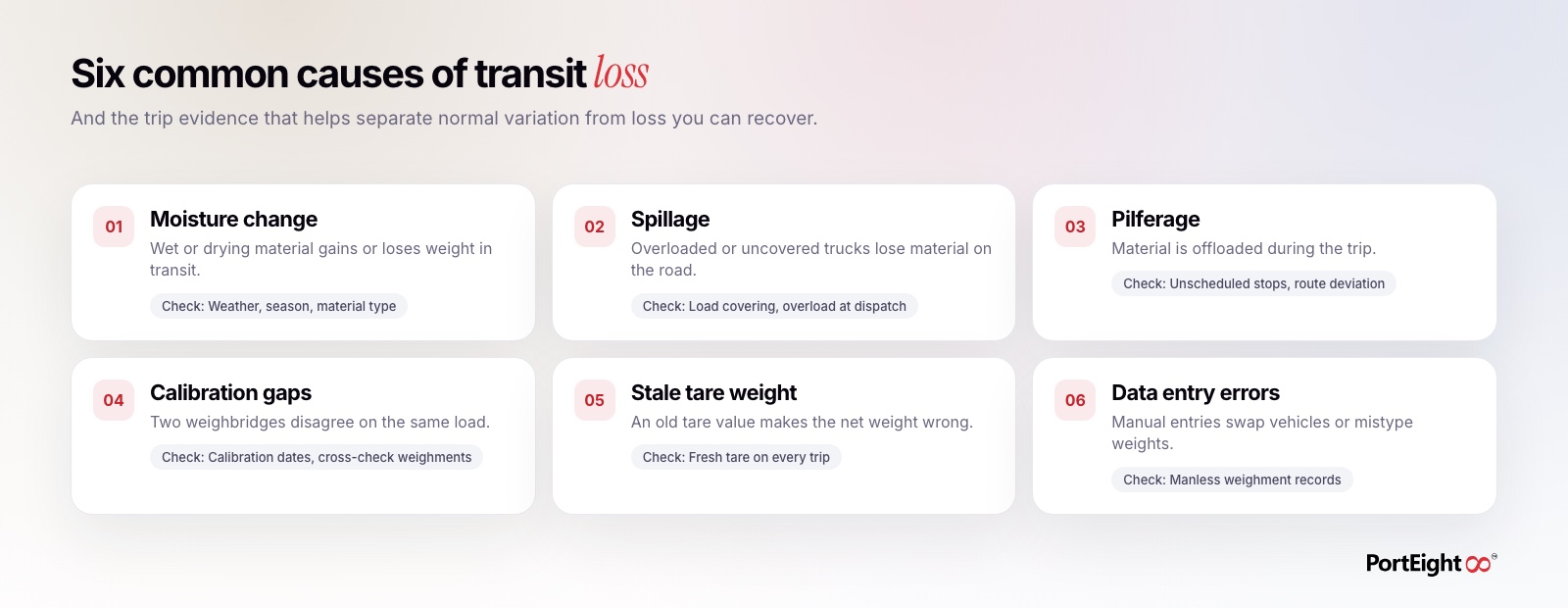
Six common causes of transit loss
A shortage is not proof of theft. Before deducting or disputing, check which cause the trip evidence supports.
- Moisture change: Wet material dries in transit, or dry material absorbs rain. The weight changes even though no material is lost.
- Spillage: Overloaded or uncovered trucks lose material on rough roads.
- Pilferage: Material is offloaded during the trip, usually at an unscheduled stop.
- Calibration gaps: The loading and unloading weighbridges are not calibrated to the same standard.
- Stale tare weight: Using an old tare value instead of weighing the empty truck on every trip makes the net weight wrong.
- Data entry errors: Manual entries swap vehicle numbers or mistype weights.
A step-by-step reconciliation process
- Weigh both ends, every trip: Record tare and gross weight at both the loading and unloading weighbridges. Do not reuse stored tare values.
- Link both weighments to one trip: The loading and unloading records must share a trip or order ID, so they can be matched without manual work.
- Calculate variance automatically: Compute the variance as soon as the unloading weighment is recorded, not at month-end.
- Flag trips outside tolerance: Send only those trips to the logistics or quality team for review.
- Review the trip evidence: Check the GPS route, stoppages, trip duration, and weather before deciding the cause.
- Settle per contract: Apply the agreed deduction for confirmed losses and record the reason against the trip.
Using trip data to separate loss from fraud
The weight difference alone does not tell you why a truck arrived light. The trip record does. A shortage on a trip with a long unscheduled stop away from the planned route tells a different story from a shortage on a trip that ran straight through heavy rain. Over a few weeks, patterns become clear: the same vehicles, transporters, or routes keep showing up outside tolerance. That is where audits and contract conversations should focus.
Keep the weighbridges honest
- Keep a calibration schedule for every weighbridge and record the dates.
- Periodically weigh the same truck on both weighbridges to check that they agree.
- Capture camera images with each weighment so the vehicle and load can be verified later.
- Remove manual weight entry wherever possible. Manless weighment records the weight directly from the indicator.
How PortEight helps
PortEight links loading and unloading weighments to the same trip automatically. Weighbridge automation records weights directly, with RFID and camera-based vehicle identification, so manual errors do not enter the data. GPS tracking and geofencing capture the route and every stop in between. See how this works for coal transportation monitoring and mining logistics. When a trip falls outside tolerance, the variance, route, and stoppages are already in one place, so teams can find the cause quickly and settle the trip with evidence both sides can see.
Take control of your logistics
operations in real time
Automate tracking, optimize movement, and eliminate delays across your entire supply chain.
Contact Us