
Truck Detention at Industrial Plants: How to Measure, Control, and Recover the Cost
At a busy cement plant, power station, or mine, a truck that should be in and out in a few hours can spend most of a day inside the gate. Every extra hour has a cost. Transporters charge detention, trucks complete fewer trips, and dispatch targets slip. Yet most plants cannot say exactly how long each truck spent on site, or which step took the time.
What detention means at an industrial plant
Detention is the time a vehicle is held at a loading or unloading point beyond the free time agreed with the transporter. Most freight contracts allow a fixed number of free hours from arrival. After that, the plant pays a detention charge, or it pays indirectly when transporters start quoting higher rates for the route.
- Direct cost: Hourly or daily detention charges billed by transporters.
- Lost capacity: A truck held for an extra half day is a trip that never happens, which hurts dispatch targets.
- Hidden rate increases: Transporters price slow plants into their freight quotes, even when detention is never billed separately.
- Yard congestion: Trucks waiting inside the plant block roads, loading bays, and the weighbridge approach.
Where the hours actually go
Turnaround time is usually measured from gate entry to gate exit, but that hides the detail you need. A truck passes through several stages: waiting outside the gate, document and gate checks, tare weighment, loading or unloading, gross weighment, and exit checks. When each stage has its own timestamp, the delay almost always turns out to sit in one or two stages, not spread evenly across the visit.
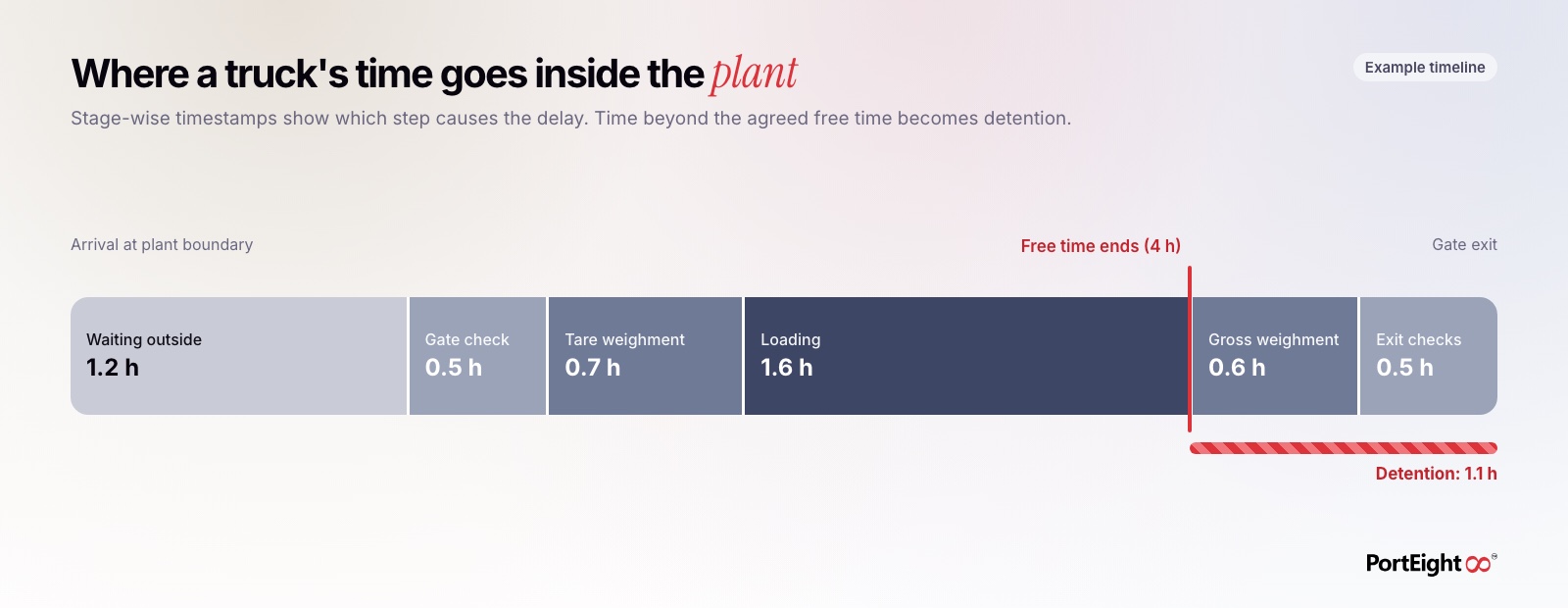
Without stage-wise data, discussions about delays rely on memory and anecdote. The loading team blames the weighbridge, the weighbridge blames the gate, and the transporter blames everyone. Stage timestamps replace that argument with a clear record.
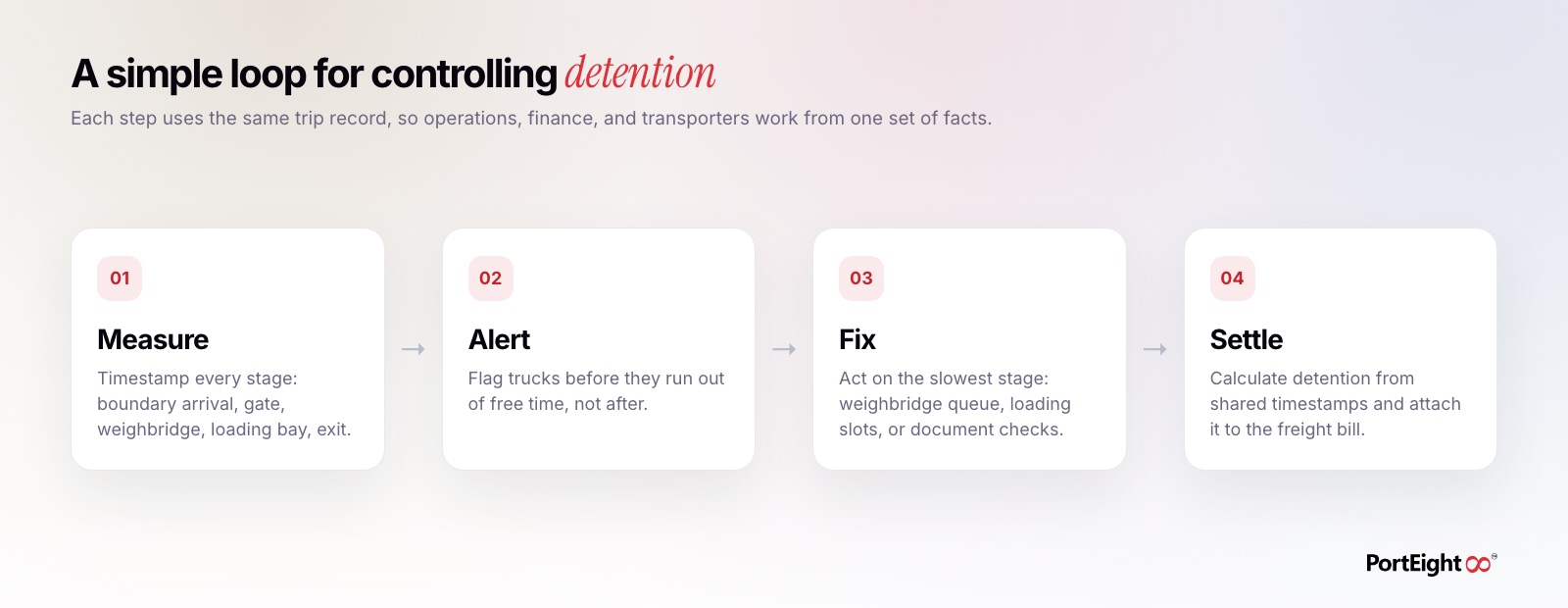
Step 1: Measure every stage with system timestamps
Manual registers capture gate entry and exit at best, and often hours after the fact. To measure detention properly, each event should be recorded automatically by the system that sees it happen.
- Arrival at the plant boundary: A GPS geofence around the plant records when the truck actually arrived, including time spent waiting outside the gate.
- Gate entry: RFID or number plate recognition logs the exact entry time and links it to the right order.
- Tare and gross weighment: The weighbridge records a timestamp with every weight, not just the weight itself.
- Loading or unloading: Bay entry and exit times show how long the truck spent at the loading point.
- Gate exit: The final timestamp closes the visit and gives the total time on site.
The gap between arrival at the boundary and gate entry matters more than most plants expect. Transporters usually count free time from arrival, while plants often count from gate entry. Recording both removes the most common source of detention disputes.
Step 2: Alert before free time runs out
Detention reports at month-end tell you what went wrong but do not prevent it. A live view of every truck on site, sorted by how much of its free time it has used, lets shift teams act while there is still time to avoid the charge.
- Show time used vs. free time for every truck currently inside the plant.
- Flag trucks that are nearing their limit so the shift team can move them up the queue.
- Escalate trucks that have crossed free time to the logistics manager, with the stage where they are stuck.
Step 3: Fix the bottleneck, not the symptom
Once you can see which stage causes the delay, the fix is usually specific and practical.
- Weighbridge queues: Manless weighment with RFID and camera-based identification cuts the time each truck spends on the platform and removes manual data entry.
- Loading delays: Staggered loading slots spread arrivals across the shift instead of letting trucks bunch up at shift start.
- Document checks: Verifying vehicle and driver documents before arrival, through Parivahan and Sarathi checks, keeps the gate moving.
- Shift changes: Comparing turnaround by hour of day often shows a slowdown around shift handovers that a simple overlap can fix.
Step 4: Settle detention from shared data
Detention disputes drag on because the plant and the transporter keep different records. When detention is calculated automatically from system timestamps against the free time in the contract, and both sides see the same timeline, most disputes are resolved quickly. The detention amount can then be attached to the freight bill instead of being negotiated separately.
How PortEight helps
PortEight connects the pieces that detention control depends on. GPS tracking and geofencing record when trucks reach the plant boundary. Manless weighbridge automation records every weighment with a timestamp. Orders and payments links each visit to its order and freight bill. The central dashboard shows every truck on site and how much of its free time it has used, so shift teams can act before detention starts, and finance can settle it from the same record.
Take control of your logistics
operations in real time
Automate tracking, optimize movement, and eliminate delays across your entire supply chain.
Contact Us