
Weighbridge Queue Management: Cutting Truck Waits with Slotting, RFID, and Manless Weighment
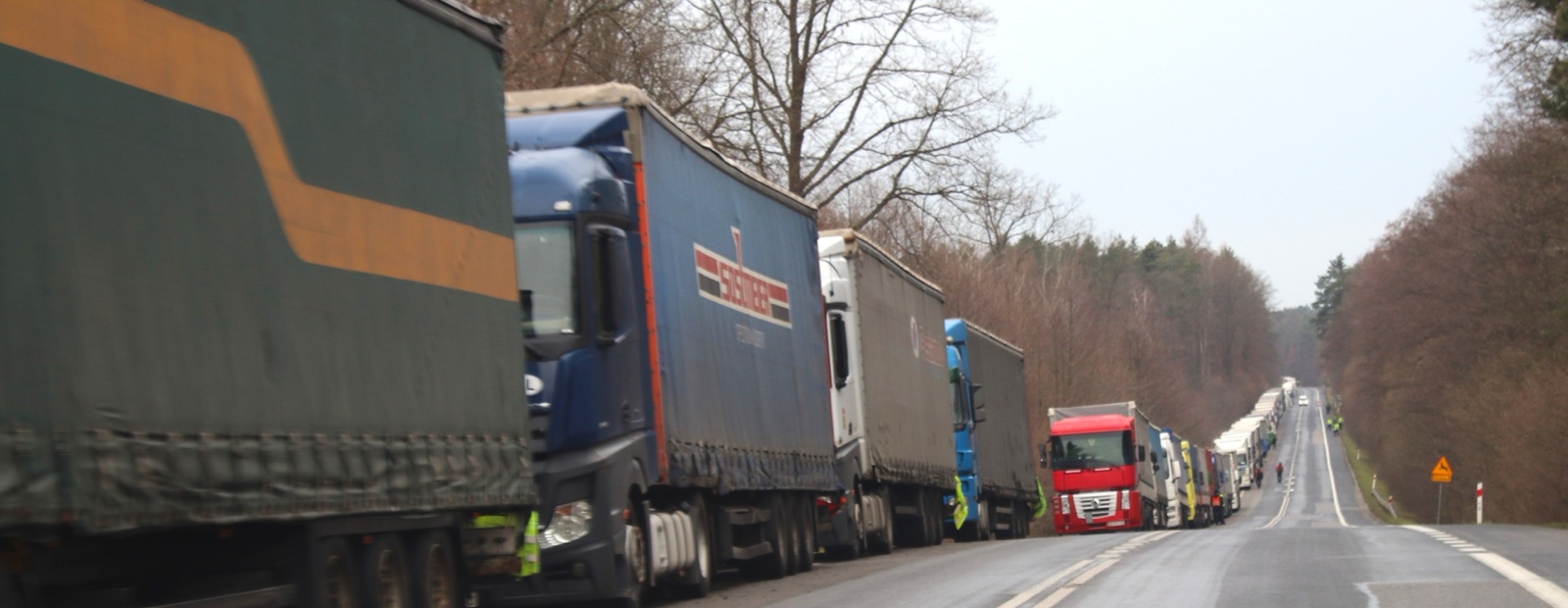
At most mines, cement plants, steel plants, and power stations, every truck crosses the weighbridge at least twice: once for tare and once for gross weight. That makes the weighbridge one of the few points every vehicle must pass, and one of the first places a queue forms. When the line backs up, trucks wait at the gate, loading bays sit idle, and transporters start counting detention hours.
Why weighbridge queues form
A weighbridge queue is rarely caused by the scale itself. Weighing a stationary truck takes very little time. The delay comes from everything that happens around the weighment, and from trucks arriving in bunches instead of a steady flow.
- Manual data entry: An operator types the vehicle number, order details, and material for every truck, and corrects mistakes while the truck sits on the platform.
- Paperwork on the platform: Drivers hand over challans, permits, or slips at the weighbridge window, and the truck cannot move until the papers are checked.
- Bunched arrivals: Trucks arrive together at shift start, after a night halt, or when a rake or vessel is being cleared, so the weighbridge is idle for hours and then overloaded.
- Mixed traffic: Inbound and outbound trucks, tare and gross weighments, and different materials all share the same platform and approach road.
- Breakdowns and recalibration: A single weighbridge with no backup stops the whole flow when it goes down.
Measure the queue before you fix it
Most plants know the weighbridge is a bottleneck, but few can say how long trucks wait for it, at which hours, or how long each weighment takes. Before changing the process, record three numbers for every truck: when it joined the queue, when it got on the platform, and when it left the platform.
- Queue entry: A GPS geofence around the weighbridge approach, or around the plant gate, records when each truck started waiting.
- Platform time: The weighbridge system records when the truck was identified and when the weight was captured.
- Hourly pattern: Grouping waiting time by hour of day shows whether the problem is constant or concentrated in a few peak hours.
- Split by weighment type: Comparing tare and gross weighments, and inbound and outbound trucks, shows which stream causes most of the wait.
The split matters because the fixes are different. Long platform time points to manual work at the weighbridge. Short platform time with long waits points to bunched arrivals or too little capacity at peak hours.
Cut the time each truck spends on the platform
Every minute saved on the platform is saved for every truck behind it. The biggest gains usually come from removing manual steps, not from adding another scale.
- Identify vehicles automatically: RFID tags or camera-based number plate recognition identify the truck as it drives on, so no one types the vehicle number.
- Link the weighment to the order: The system fetches the open order, material, and transporter for that vehicle instead of the operator selecting them.
- Capture the weight without an operator: A manless weighbridge records the stable weight, takes camera images, and prints or sends the slip automatically.
- Control the platform with signals and boom barriers: Traffic lights and barriers tell the next driver when to drive on, which avoids partial weighments and repeated attempts.
- Check position on the platform: Sensors or cameras confirm that the whole truck is on the platform before the weight is accepted.
Spread arrivals with time slots
Even a fast weighbridge will build a queue if most trucks arrive in the same two hours. Slotting means giving each truck, or each transporter, a time window to report to the plant. The goal is not a perfect schedule. It is to flatten the peaks so the weighbridge and loading bays work at a steady pace through the shift.
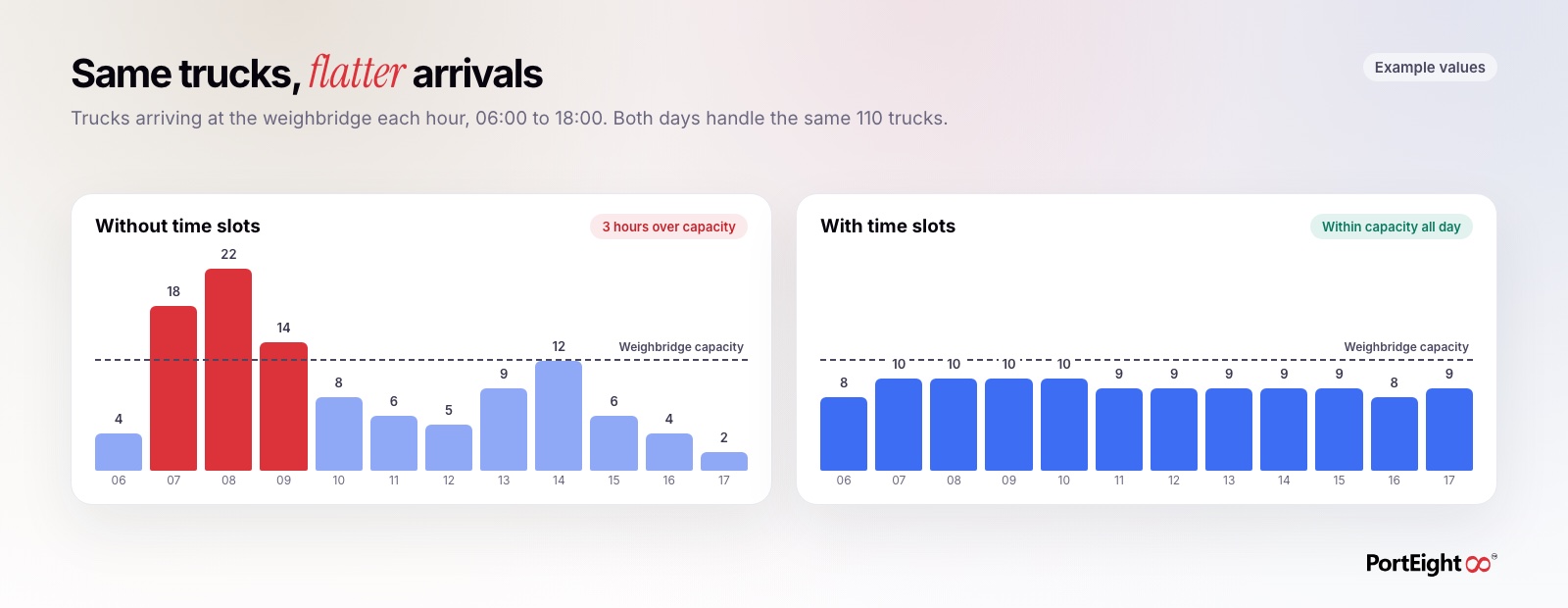
- Start with the data: Use the hourly arrival pattern from your queue measurements to decide how many trucks each hour can actually handle.
- Allocate slots by order: Tie each slot to a freight order, so dispatch plans and gate arrivals match.
- Use GPS to confirm arrival: A geofence entry shows whether a truck arrived in its window, early, or late, without relying on a gate register.
- Keep a buffer: Leave some capacity unallocated each hour for late trucks and urgent loads, so one delay does not push the whole day back.
- Review with transporters: Share arrival data with transporters so they can plan departures from the mine or depot around the slots.
Keep paperwork away from the platform
Any check that can happen before the truck reaches the weighbridge should happen before. A truck stopped on the platform while someone verifies a document holds up every vehicle behind it.
- Check vehicle and driver documents in advance: Vehicle registration, fitness, permits, and driver licenses can be verified through Parivahan and Sarathi before the truck is allowed into the queue.
- Issue orders digitally: A digital freight order that already holds the vehicle, transporter, and material removes the need for paper at the window.
- Send slips digitally: Weighment slips shared with the transporter and customer after the weighment mean drivers do not wait for printouts.
- Handle exceptions off the platform: Trucks with a mismatch, such as an expired document or an unknown vehicle, are moved to a holding area instead of blocking the scale.
Organize lanes and sequence trucks
Plants with more than one weighbridge often let trucks pick any free platform. That works until a few slow weighments clog every lane at once. Assigning traffic deliberately keeps each stream predictable.
- Separate streams where possible: Dedicate a platform, or specific hours, to inbound raw material and another to outbound dispatch.
- Avoid crossing paths: Lay out the approach so trucks going to tare and trucks returning for gross weighment do not block each other.
- Plan for downtime: Agree in advance how traffic will be routed when one weighbridge is under maintenance or recalibration.
- Watch the live queue: A shared view of trucks waiting, by lane and by time waited, lets shift teams move urgent loads forward and open extra capacity before the line gets long.
How PortEight helps
PortEight brings together the data and controls that weighbridge queue management depends on. GPS fleet tracking and geofencing record when each truck reaches the plant and joins the queue. Manless weighbridge automation identifies vehicles with RFID and camera-based number plate recognition, captures the weight without manual entry, and timestamps every weighment. Orders and payments link each weighment to its freight order, invoice, and payment. Vehicle and driver documents can be checked through Parivahan and Sarathi before trucks reach the gate. The central dashboard brings trip, gate, and weighment data into one view, so plant and logistics teams can see where the delay is and act on it during the shift.
Take control of your logistics
operations in real time
Automate tracking, optimize movement, and eliminate delays across your entire supply chain.
Contact Us